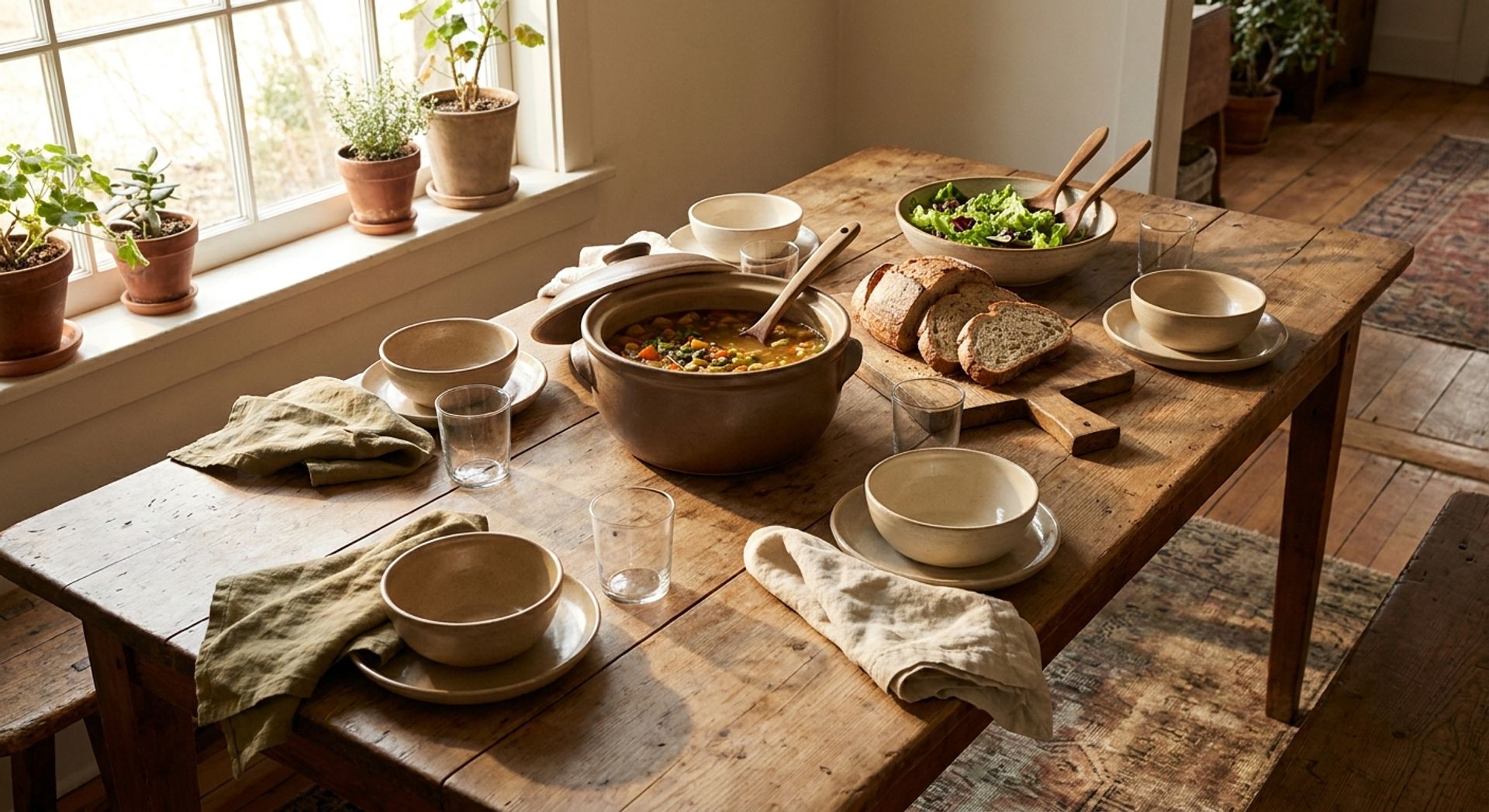
Family meals on treatment: cooking for others when your appetite changes
When your own appetite is quieter on prescribed weight-management treatment, shared household meals can still work: one flexible base meal, a portion that suits you, and calm conversations, with no outcome promises.
- Family meals
- Cooking
- Household
- Routines
- Clinical review
Quick answer
Cooking for a partner, children or housemates does not have to change because your own appetite feels different. In a prescribed treatment pathway, many people find it easier to cook one shared base meal and adjust only their own portion. A family meal is not a test of the treatment, and no particular way of eating together guarantees any result.
If cooking smells regularly make you feel unwell, shared meals often end in discomfort, or you find you are skipping your own meals while feeding others, note the pattern and bring it to your clinical review. A doctor reviews your information and decides on the prescription. This article is educational support, not individual medical advice. This article is for information and does not replace medical advice. If you have severe side effects, contact a doctor straight away, the out-of-hours service on 116117 or, in an emergency, 112.
One base meal, flexible portions
Public guidance such as the NHS Eatwell Guide and the recommendations of the German Nutrition Society (DGE) describes balanced eating as a mix of vegetables and fruit, wholegrain or starchy foods, protein foods and dairy or alternatives. That balance works for a whole household, so you rarely need a separate meal. A pot of soup, a tray of roasted vegetables with a protein, or a pasta dish with a vegetable sauce can be served in different portion sizes.
Serve yourself first with a smaller portion, or use a smaller plate, so you are not working against a full family plate. Eat slowly and stop when your body says enough. If your appetite is small, make sure your plate still has some protein and vegetables, in line with balanced-eating guidance, and ask your doctor if you are unsure whether you are getting enough.
Leftovers can become a later meal, kept in the fridge, rather than finishing food just so it is not wasted.
When cooking smells or rich food feel like too much
Feeling sick can come and go on treatment, and strong smells can make it worse for some people. NHS guidance on feeling sick suggests getting plenty of fresh air, taking regular sips of a cold drink and eating smaller, more frequent meals, and advises against cooking strong-smelling food and eating hot, fried or greasy food. In the kitchen, that can mean opening a window, using a lid, choosing milder dishes, or swapping tasks so someone else handles the frying while you prepare a salad or set the table.
If greasy or very rich meals sit badly, you can keep the shared base meal simple and let others add sauces or extras at the table. Note what helps and what does not, so you can discuss it at clinical review.
Talking with your household
You decide how much you share about your treatment. A simple sentence such as "I'm eating a bit less at the moment, the food is lovely" is often enough. You do not owe anyone medical details, and a smaller plate does not need an explanation.
With children at the table, many families find it helpful to keep mealtimes relaxed: talk about the day rather than about bodies or portions, and avoid labelling foods as good or bad. Comments about anyone's plate or body, including your own, rarely help. Treatment is about your health and wellbeing, not about how anyone looks.
When to contact your doctor
Contact your doctor promptly for severe or worsening symptoms, for example persistent vomiting, being unable to keep fluids down, fainting, severe abdominal pain, chest pain or shortness of breath. Seek urgent help for acute or uncertain symptoms. If you have severe side effects, contact a doctor straight away, the out-of-hours service on 116117 or, in an emergency, 112.
Bring milder but recurring issues to your next clinical review: regularly skipping your own meals, nausea triggered by cooking, ongoing discomfort after shared meals, or uncertainty about how much to eat. Your prescribing doctor can plan with you.
How to approach it
Practical habits for cooking and eating with others while your appetite feels different on treatment.
- Do: cook one balanced base meal and adjust only your own portion
- Do: serve yourself first, or use a smaller plate, and stop when comfort says enough
- Do: open a window, use lids or share kitchen tasks if smells bother you
- Do: keep leftovers in the fridge for a later meal instead of finishing everything
- Do: ask at clinical review if skipped meals, nausea while cooking or discomfort after meals keep coming up
- Don't: finish food just to avoid waste or to please others
- Don't: cook a separate diet meal for yourself if the shared meal can work
- Don't: comment on bodies or portions at the table, including your own
- Don't: stop or change treatment because of mealtime habits without clinical advice
- Seek urgent help for persistent vomiting, fainting, severe pain or if you cannot keep fluids down
Frequently asked questions
Educational note
This Journal article is general information about everyday family meals in a prescribed weight-management treatment pathway. It is not a diagnosis, a prescription or a promise of any outcome. Eligibility, dose changes and personal dietary limits are decided by your prescribing doctor after clinical review. This article is for information and does not replace medical advice.
Sources and medical review
Based on public nutrition and symptom guidance for everyday habits, and educational frameworks for prescribed treatment pathways. For information only, not individual medical advice. Reviewer stays empty until medical sign-off.