Heartburn and indigestion on treatment: comfort tips and when to call
Heartburn, indigestion and burping can happen during prescribed weight-management treatment. Here are calm, practical tips for meals, evenings and pharmacy questions, plus clear signs for when to get medical advice.
- Heartburn
- Indigestion
- Side effects
- Everyday habits
- Clinical review
In short
Heartburn, indigestion and burping can happen during prescribed weight-management treatment with a weekly injection or daily tablet. Smaller meals, eating slowly, leaving time between your last meal and bed, and knowing your own triggers often make everyday life more comfortable.
Keep taking your treatment as prescribed, and talk to your doctor or pharmacist before you add any medicine for heartburn. A doctor reviews your details and decides on the prescription. This article is for information and does not replace medical advice. If you have severe side effects, contact a doctor straight away, the out-of-hours service on 116117 or, in an emergency, 112.
What heartburn and indigestion feel like
Heartburn is a burning feeling in the middle of the chest. It happens when stomach acid travels up towards the throat. You may also notice a sour taste in your mouth, burping, a feeling of fullness or feeling sick. Symptoms are often worse after eating, when lying down and when bending over (NHS; gesund.bund.de).
In the EU product information for these medicines, indigestion, reflux of stomach acid and burping are listed among the common side effects (EMA product information). If symptoms are new, change after a dose change or keep coming back, tell your doctor.
Meals that are easier on your stomach
Smaller, more frequent meals are one of the main self-help tips for heartburn (NHS). When your appetite is quieter, this often fits naturally: a few small meals and snacks spread across the day instead of large plates. Eat slowly, chew well and stop when you feel full.
Some foods and drinks make symptoms worse for many people, such as coffee, alcohol, chocolate, tomatoes and fatty or spicy food (NHS). You do not need to cut everything out. A short note of what you ate and how you felt afterwards can help you spot your own triggers and talk about them at your next doctor's visit.
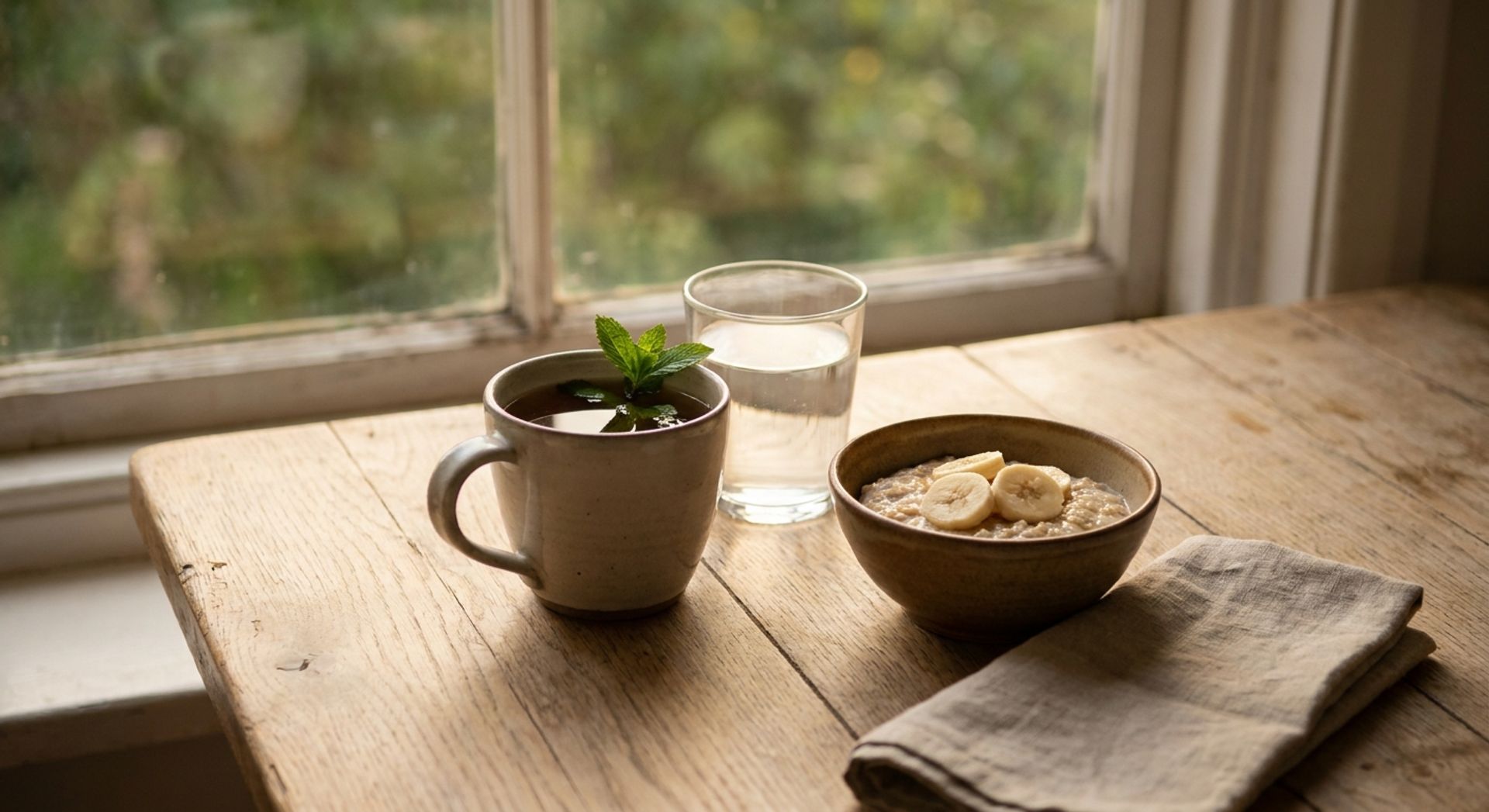
Keep drinking regularly through the day, ideally water or unsweetened tea (DGE). Small sips often feel more comfortable than large glasses at once.
Evenings and sleep
Lying down soon after eating can make reflux worse. The NHS advises not eating in the hours before bed and not wearing clothes that are tight around your waist (NHS).
Raising the head end of your bed, so your chest and head are higher than your waist, can help stop acid travelling up. Extra pillows are not a good substitute, because they can increase pressure on your belly (NHS). If you like to rest after a meal, a short, gentle walk or sitting upright are alternatives to lying down.
Stress, smoking and other medicines
Stress and anxiety, smoking and some medicines, such as anti-inflammatory painkillers, can cause or worsen heartburn (NHS). Small ways to relax, and support to stop smoking if you want it, can help.
If you take other medicines, ask your pharmacist or doctor whether they could play a role. Do not stop any prescribed medicine without speaking to a doctor first (NHS).
Pharmacy remedies: ask first
A pharmacy can advise you on heartburn and often recommends acid-neutralising medicines (antacids) or alginates. They help in the short term but do not fix the cause, and they should not be taken regularly for long periods without advice (NHS).
Tell the pharmacy about your weight-management treatment and any other medicines you take. If you take a daily tablet, follow the intake instructions in the patient leaflet and ask how to time other medicines around it (EMA product information). If you often need something for heartburn, talk to your doctor.
When to get medical advice
See your doctor or GP if you have heartburn on most days, if self-help and pharmacy remedies do not help, or if food also gets stuck when you swallow or you are being sick often (NHS; gesund.bund.de). Your GP remains an important part of your care.
Contact your doctor if you have persistent vomiting, cannot keep fluids down, notice signs of dehydration, or have severe stomach pain that does not go away and may spread to your back. The EMA product information names these symptoms as reasons to seek medical advice. If you have severe side effects, contact a doctor straight away, the out-of-hours service on 116117 or, in an emergency, 112.
Chest pain is not always heartburn. Call 112 straight away if you have sudden chest pain or pressure that does not go away, even if it feels like burning or indigestion, pain that spreads to your arm, neck, jaw, stomach or back, or chest pain together with sweating, feeling sick, light-headedness or shortness of breath (NHS).
Keep your usual treatment day or time as described in the patient leaflet, and do not change, pause or double a dose without advice from your prescribing doctor or pharmacist (EMA product information). A doctor reviews your details and decides on the prescription. You can report suspected side effects in Germany through the BfArM and PEI reporting portal.
What to do
Practical steps for a calmer stomach day to day.
- Do: eat smaller meals more often, slowly and until you feel full
- Do: notice and note which foods or drinks seem to trigger symptoms
- Do: leave a few hours between your last meal and bed
- Do: raise the head end of your bed rather than adding pillows
- Do: wear clothes that feel comfortable around your waist
- Do: tell the pharmacy about your treatment before buying a heartburn remedy
- Don't: change, pause or double a dose without medical advice
- For sudden chest pain or pressure that does not go away: call 112 straight away
Frequently asked questions
Note
This Journal article offers general information about heartburn and indigestion during prescribed weight-management treatment. It is not a diagnosis, a prescription or a promise of any result. Your prescribing doctor decides on suitability, dose changes and personal limits after clinical review. This article is for information and does not replace medical advice.
Sources and clinical review
Based on EMA product information, NHS information on heartburn and chest pain, gesund.bund.de information on heartburn and reflux disease, DGE guidance on drinking, the German reflux and obesity guidelines and the side-effect reporting portal. For information only, not individual medical advice. Clinical review pending.
- European Medicines Agency (EMA): medicine search, product information (EPAR)
- NHS: Heartburn and acid reflux
- NHS: Chest pain
- gesund.bund.de (German Federal Ministry of Health): heartburn and reflux disease (in German)
- German Nutrition Society (DGE): FAQ on water and drinking
- AWMF: guideline on gastro-oesophageal reflux disease (021-013)
- AWMF: S3 guideline on the prevention and treatment of obesity (050-001)
- BfArM/PEI: report side effects (nebenwirkungen.bund.de)