Snacks on treatment: small, planned options between smaller meals
When meals get smaller on prescribed weight-management treatment, a few simple, planned snacks can help you stay nourished and comfortable across the day, with no promises about results.
- Snacks
- Mealtimes
- Nutrition
- Routines
- Clinical review
Short answer
On a prescribed treatment pathway, many people notice that main meals feel smaller or that they get full sooner. A small, planned snack between meals can help some people spread their food across the day so they still get a balanced mix of nutrients. NHS advice on feeling sick also lists eating smaller, more frequent meals among the things that may help. Snacks are not a requirement, and no particular way of eating guarantees any result.
If you often skip meals without noticing, feel unwell after eating or are unsure whether you are getting enough, note the pattern and bring it to clinical review. A doctor reviews your information and decides on the prescription. This article is educational support, not individual medical advice. This article is for information and does not replace medical advice. If you have severe side effects, contact a doctor straight away, the out-of-hours service on 116117 or, in an emergency, 112.
Why snacks can look different on treatment
Before treatment, snacks were often something extra on top of full meals. On treatment, some people find that a usual portion now feels like too much, so a small snack can become a planned part of the day rather than an impulse.
The aim is not to eat more for its own sake. It is to make sure the smaller amounts you do eat still count. Public guidance such as the NHS Eatwell Guide and the DGE recommendations describes a balanced pattern with plenty of vegetables and fruit, wholegrain foods, pulses and nuts, and dairy or fortified alternatives. A snack can be a simple way to fit some of these in.
Simple snack ideas
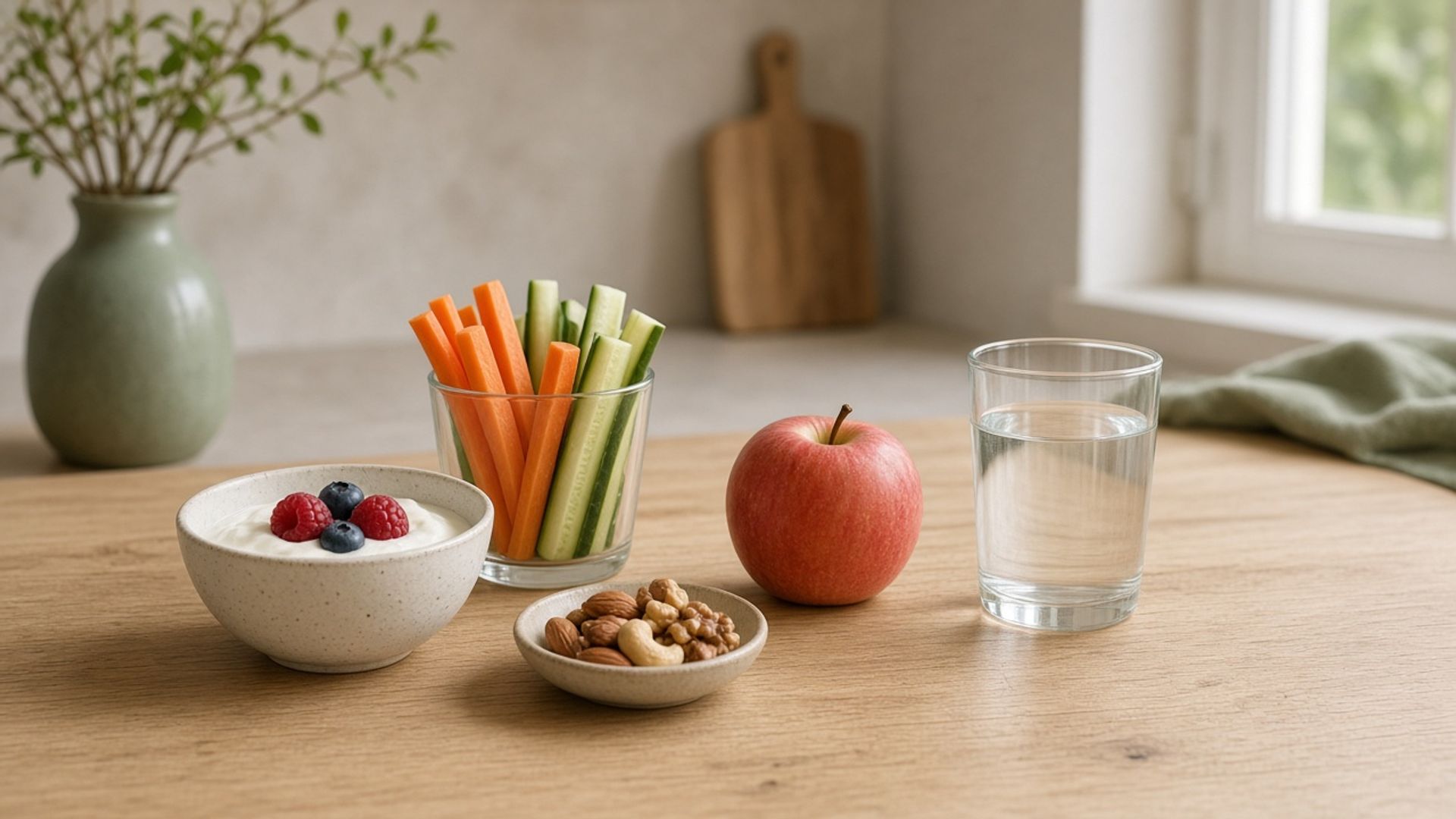
Choose foods that bring something useful with them. Ideas in line with the DGE and NHS guidance include a piece of fresh fruit, vegetable sticks, plain yoghurt or another dairy product, a small handful of unsalted nuts, or a slice of wholegrain bread. The NHS suggests, for example, swapping a usual mid-morning snack for a piece of fresh fruit.
Keep sweets, salty snacks and very fatty foods as occasional extras. The DGE recommendations advise leaving sugary, salty and fatty foods aside more often, because they often contain hidden sugar, salt and fat. If you buy packaged snacks, the colour coding on the front of many packs shows at a glance whether a product is high, medium or low in fat, saturated fat, sugars and salt, as the NHS guide to food labels explains.
Comfort and timing
Some people find that rich, greasy or strongly flavoured food sits less well, especially in larger amounts. NHS advice on nausea suggests eating smaller, more frequent meals, not eating too quickly, not having a large drink with meals and not lying down soon after eating. These are general self-care tips. They do not replace clinical review, and they do not change your prescribed treatment on their own.
Water is the best everyday drink, according to the DGE recommendations. Sipping water across the day can be easier than a large glass with a snack or meal. Sugary drinks are not recommended as a regular snack replacement.
When to contact your doctor
Contact your doctor promptly about severe or worsening symptoms, such as persistent vomiting, being unable to keep fluids down, fainting, severe stomach pain, chest pain or shortness of breath. Get urgent help for acute or uncertain symptoms. If you have severe side effects, contact a doctor straight away, the out-of-hours service on 116117 or, in an emergency, 112.
Bring milder but recurring issues to your next clinical review: regularly skipped meals, feeling weak or dizzy between meals, ongoing nausea or discomfort after eating, or uncertainty about how much to eat. If you have diabetes or another condition that affects how and when you should eat, follow the plan agreed with your doctor and ask before changing your eating pattern.
How to
Practical habits for planned, comfortable snacks while your appetite feels different on treatment.
- Do: plan one or two small snacks if your main meals have become smaller
- Do: choose fruit, vegetable sticks, plain yoghurt, unsalted nuts or wholegrain bread more often
- Do: keep a few simple options ready at home or in your bag
- Do: check the front-of-pack colour coding on packaged snacks
- Do: sip water across the day
- Do: raise skipped meals, dizziness or ongoing discomfort at clinical review
- Don't: eat a snack just because it is there if you are not hungry
- Don't: rely on sweets, salty snacks or sugary drinks as everyday fillers
- Don't: stop or change treatment because of eating habits without clinical advice
- If you have persistent vomiting, fainting, severe pain or cannot keep fluids down, get urgent help
Frequently asked questions
Educational note
This Journal post is general information about everyday snacks on a prescribed weight-management pathway. It is not a diagnosis, a prescription or a promise of any result. Medical guidelines such as the German S3 guideline on obesity describe nutrition as one part of a broader treatment plan. Eligibility, dose changes and personal nutrition limits are decided by your prescribing doctor after clinical review. This article is for information and does not replace medical advice.
Sources and medical review
Based on public nutrition and symptom guidance for everyday habits and the German obesity guideline for prescribed treatment pathways. For information only, not individual medical advice. Reviewer left empty until medical sign-off.