Storing GLP-1 medicines properly: fridge, heat and on the go
Peptide medicines are sensitive to heat, frost and light. Where your pens belong, what to watch in summer and how to tell a pen is no longer okay.
- GLP-1
- storage
- practical
In short
Unopened pens belong in the fridge at 2 to 8 °C, in their original packaging and never in the freezer. Pens in use can stay at room temperature for a limited time with most products.
How long and up to what temperature differs by product. It's in the package leaflet, and that's what you go by.
Why storage matters so much here
GLP-1 medicines are peptides, small protein molecules. Heat, frost and light can change their structure. A pen that got too warm or froze often looks unchanged but may work less reliably.
So the bathroom isn't a good spot, even if your other medicines live there: it gets warm and humid.
In the fridge
- Keep it in the original packaging, which protects against light
- Use the middle shelf, not the door, where temperature fluctuates most
- Not against the back wall or next to the cooling element, where things can freeze
- Never freeze. A pen that has been frozen must not be used, even after thawing.
- Keep out of reach of children
Pens in use and room temperature
After first use, many pens may be kept out of the fridge as long as a certain temperature isn't exceeded. The permitted time differs by active substance and product. It helps to write the date the pen came out of the fridge on the box.
Put the cap back on after each use to protect the contents from light, and unscrew the needle.
Summer, the car and on the go
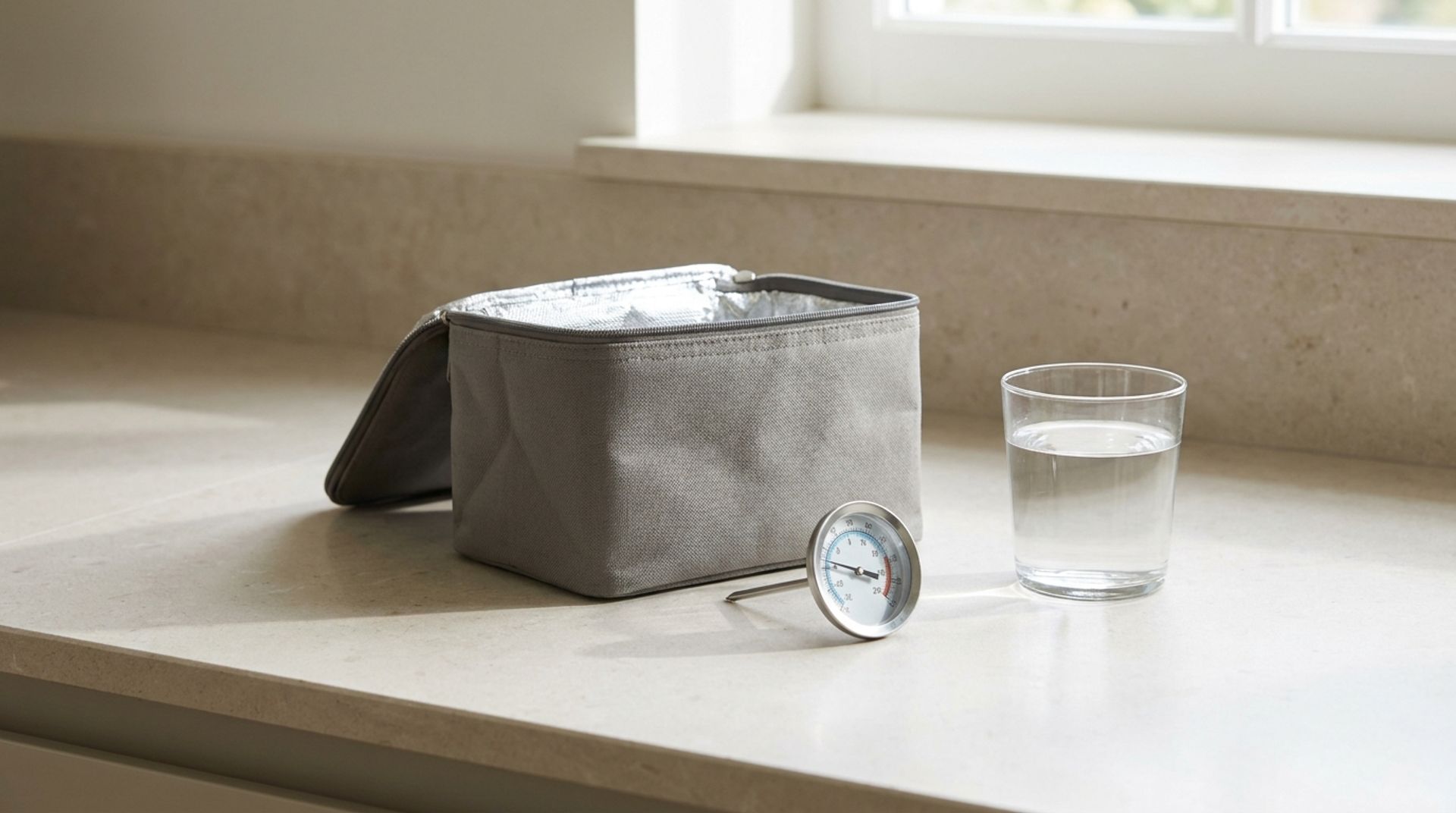
In summer things get too warm fast: in a parked car, a beach bag or on a windowsill. On the go, a small cool bag helps, but don't put pens directly against ice packs or they may freeze. A small thermometer in the bag shows whether the temperature is right.
When flying, medicine goes in your hand luggage, because the hold can get very cold.
When not to use a pen any more
- It has been frozen
- It was well above the permitted temperature or unrefrigerated for longer than allowed
- The solution is cloudy, discoloured or contains particles
- It's past its expiry date
- If in doubt, ask your pharmacy before using it
Note
This Journal article offers general information. It is not a diagnosis, a prescription or a promise of any result. Whether treatment is suitable for you is decided by a doctor after reviewing your questionnaire. For acute or severe symptoms, contact your GP, the out-of-hours medical service (116117) or, in an emergency, 112.
Sources and medical review
Based on manufacturers' prescribing information and package leaflets for GLP-1 medicines. Educational only; does not replace the package leaflet. Medical review pending.
- Manufacturers' prescribing information and package leaflets